
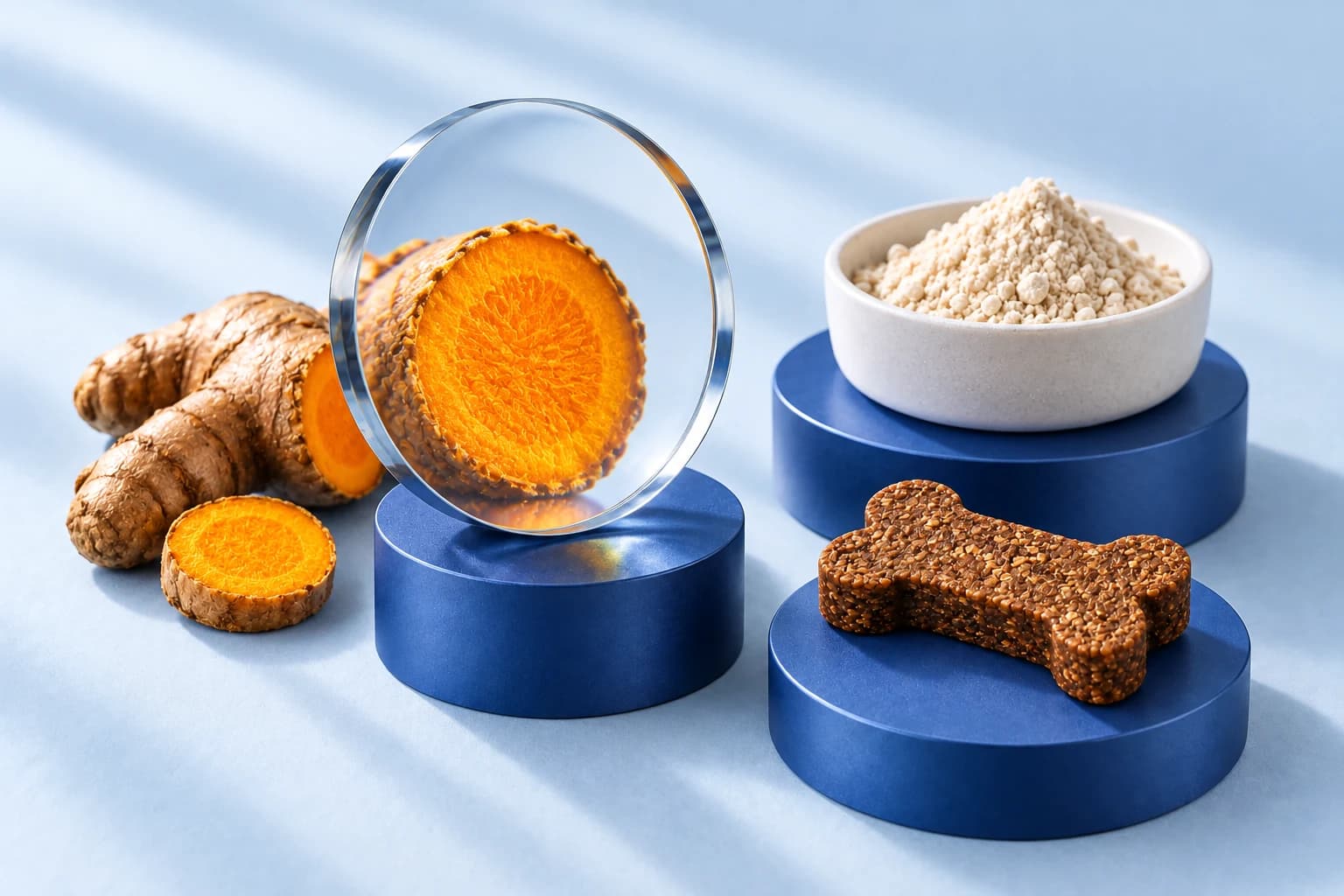
Define the decision before collecting evidence
A recognisable ingredient can make a product easy to explain. It does not answer every question about the finished recipe. Before comparing two proposals, write down what you are trying to establish: the composition, suitability for your intended routine, acceptance by the target species, or evidence relating to a particular product benefit.
Those questions require different information. A specification describes the product. A palatability report describes behaviour under a stated test. Research on an ingredient addresses the conditions investigated in that research. Keep each document attached to the question it can help answer.
Identify the ingredient actually being proposed
Use the catalogue name to start a conversation, then request the identity and preparation specified for the recipe. A familiar botanical name may leave further questions about the plant part, powder or extract. A named compound may be supplied as part of a preparation rather than as a pure material.
Build a short comparison with one row per ingredient. Record the declared form, the amount and its basis: per unit, per serving or another stated measure. Leave an unknown field open for confirmation. Filling it with an assumption makes the comparison look more complete while making it less reliable.
Review the product around the ingredient
The sample deserves its own review. Consider its size, texture, aroma and intended way of giving it alongside the written composition. A recipe that looks attractive on paper still has to become a defined physical product your customer can understand and use.
One experimental study of extruded dog foods found that fibre treatments affected sensory characteristics, and that coating changed several aroma and flavour attributes. That finding concerns the particular foods studied; it does not predict the behaviour of a soft chew or powder. It illustrates why a finished sample adds information that an ingredient name alone cannot provide.
Check how closely the evidence matches
When a study is offered as support, compare its subject with the proposed product. Read what was actually tested before deciding how the result should inform your brief. A relevant paper can be useful without being a trial of your exact recipe.
- Material: does the study identify the same preparation or a different one?
- Species and population: which animals were studied, and in what circumstances?
- Amount and delivery: what was given, in which form, and for how long?
- Outcome: what was measured, against which comparison, and with what limitations?
Turn the review into a clear next step
Keep three short lists: confirmed product details, relevant evidence and unanswered questions. Use them to decide whether to request a sample, clarify a specification or discuss development. You do not need to force every uncertainty into a yes-or-no score.
For two catalogue options, compare the exact species and format references. A shared ingredient or functional category is a useful connection, but it is not a substitute for reviewing each product. The useful result is a reasoned shortlist with the next question visible.