
Start with the moment of use
Picture the product in an owner's hands. Will it be offered separately, mixed into wet food or used as a reward? That simple decision gives your brief a practical starting point before you choose ingredients or packaging.
Name the target species and the role in your range. A dog training reward, a cat supplement and a dental-care product involve different product choices, even when they share a similar visual identity.
Compare the relevant options
Use these routes to narrow your shortlist. Each has its own product details to review.
- Soft chews: a format given separately, with catalogue recipes for dogs and cats. Compare the individual ingredient profile, physical form and serving guidance.
- Powders: a format mixed into wet food. Check the relevant recipe and how its serving is measured.
- Dental care: choose between dental sticks for dogs and dental powders for dogs and cats. It is a product area spanning two formats.
- Functional Dog Treats: meat-based treats with selected functional ingredients. Explore the recipes and available shapes for your range.
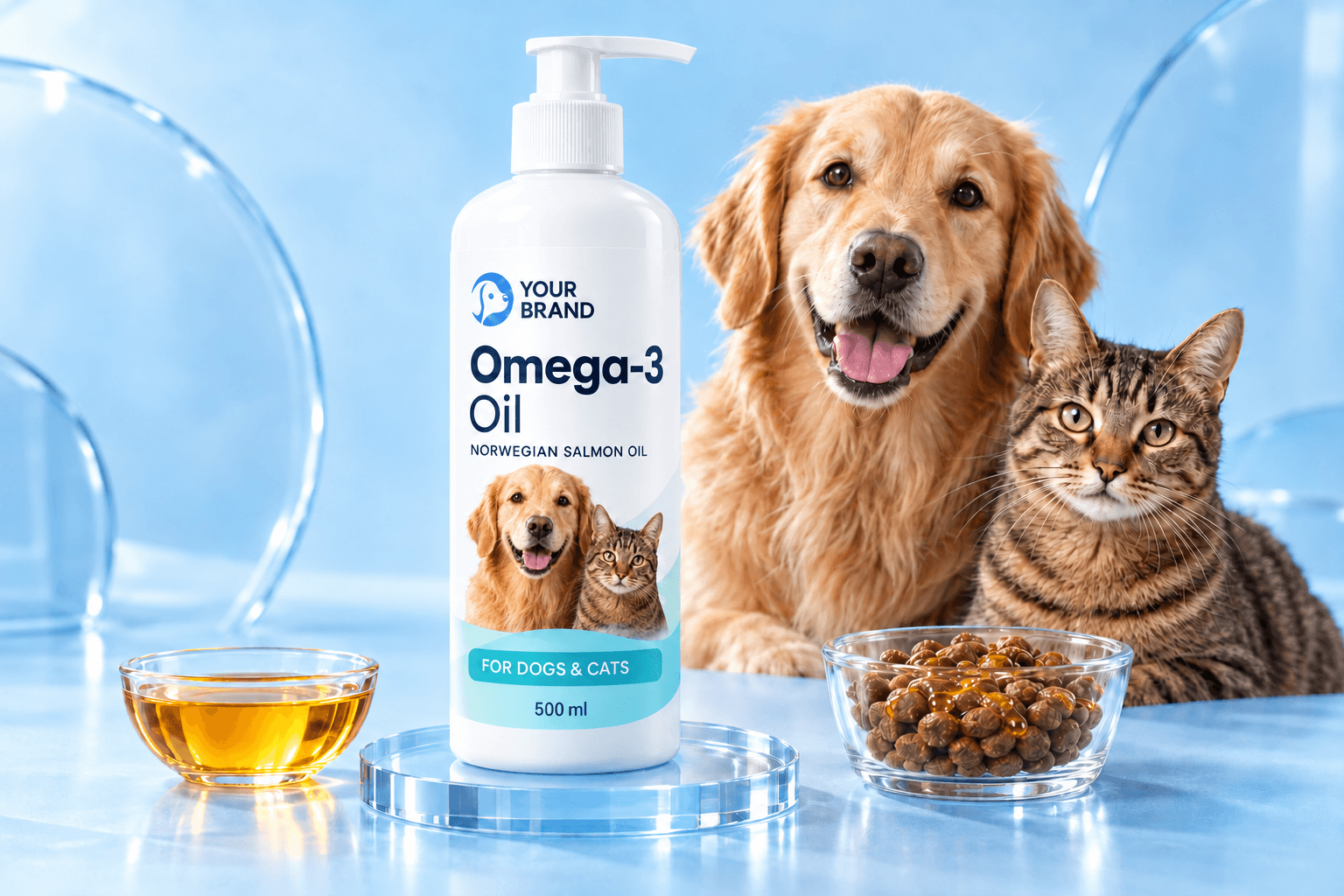
- Omega-3 Oil: 100% Norwegian salmon oil for dogs and cats, available in 250 and 500 ml bottles. Review the product specification and serving guide for this oil.
Match the recipe to the format
Review the specification for the exact species and format you want. Our matching feline soft chews and powders share the same ingredient composition, while serving instructions and quantities are confirmed for the chosen format. A shared name alone does not establish this relationship for other products.
If a preferred ingredient profile does not have a suitable catalogue option, bring it into a development discussion. Flavour, texture and serving are part of that conversation; a visual preference alone cannot settle the formulation.
Bring a short, useful brief
You do not need every answer before contacting us. Write a short brief that separates fixed requirements from preferences. It should let the team suggest an appropriate product route without guessing how you want the product to be used.
- Target species, intended product need and market.
- Preferred way to give the product.
- An exact catalogue reference or ingredient direction, plus any must-have requirements.
- Packaging preference and expected order quantity, if known.